Why Solar Panel Maintenance Matters in Idaho
We regularly share essential Solar Panel Maintenance Tips for Idaho Homeowners because we see property owners completely surprised by sudden drops in their energy production. The reality is that installing panels is only the first step.
Our team knows from direct field experience providing solar panel cleaning in Idaho how the local climate creates unique challenges for solar arrays. From the dusty summers in the Treasure Valley to heavy snowfall in the higher elevations, these conditions significantly reduce your energy output if ignored. Many homeowners assume that rain alone will wash the glass clean.
Data from the National Renewable Energy Laboratory shows that dirty panels lose between 5 and 25 percent of their energy output due to soiling.
For a standard 10-kilowatt residential system in Idaho, losing 25 percent efficiency easily translates to losing over $400 in generated electricity value every single year.
We will break down the exact seasonal maintenance steps required to protect that investment. Let’s look at the data, what it actually means for your roof, and explore the practical ways to keep your system running perfectly.
Seasonal Solar Panel Maintenance Tips for Idaho Homeowners
Spring Maintenance (March Through May)
Spring acts as the critical recovery period for your solar setup. After months of freezing temperatures and ice accumulation, your system needs a thorough check to prepare for peak sunlight hours.
Our technicians highly recommend completing this work before late April. That timeline helps you avoid the heavy cottonwood tree pollen that coats the Treasure Valley and creates a sticky, sun-blocking film on the glass.
- Conduct a visual inspection: Stand on the ground and use binoculars to check for cracked glass or displaced mounting hardware.
- Check your inverter application: Look at your Enphase or SolarEdge monitoring app for any red flag error codes triggered during the winter freeze.
- Schedule professional cleanings: Remove hard water mineral deposits left behind by melting snow.
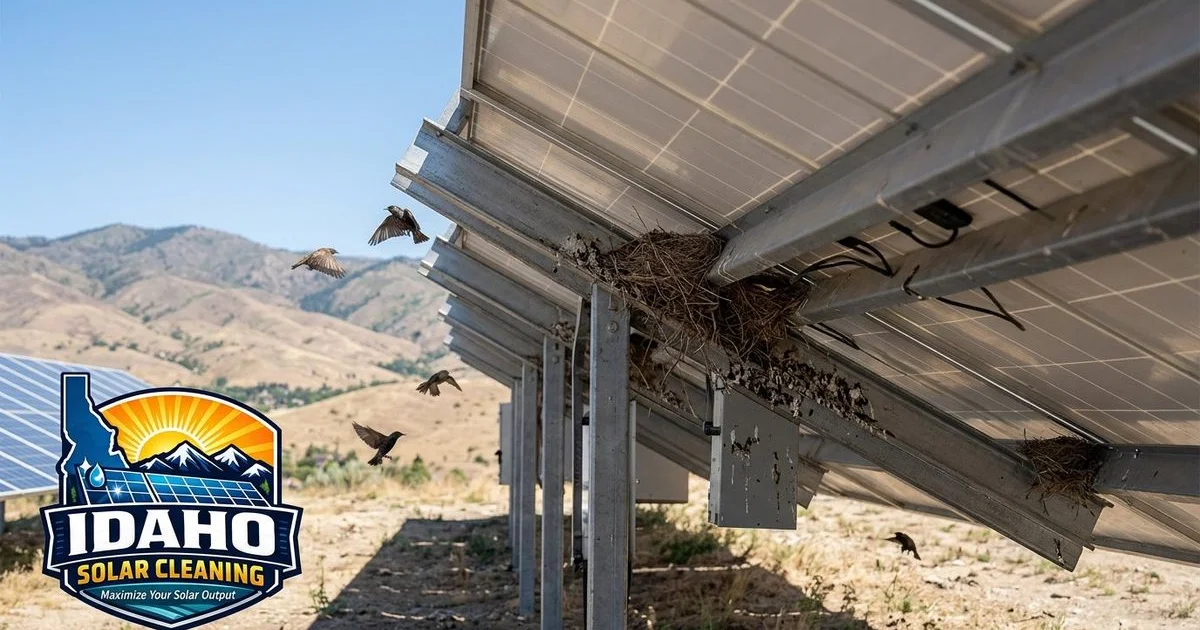
- Inspect conduit lines: Look closely at exposed wiring for bite marks left by rodents during their winter nesting phase.
- Trim back new vegetation: Cut away tree branches that sprouted during early spring and now cast long shadows.

Summer Maintenance (June Through August)
Summer heat and extreme dryness force your solar array to work under stressful conditions. A mid-summer wash restores your system to full capacity exactly when you need the electricity to run your air conditioning.
Our service logs show that July and August consistently bring the highest concentration of dust and airborne particulates. During intense wildfire seasons, a layer of fine PM2.5 ash can blanket your roof and slash daily energy production by up to 30 percent.
We advise keeping a very close eye on your weekly output during these hazy weeks.
- Track production metrics: Compare your current weekly output against the historical data in your app for the same month last year.
- Monitor thick dust buildup: Check the lower edges of the frames where dust pools during dry, windy days.
- Spot-check for bird droppings: Remove these highly acidic deposits quickly, as they create concentrated hot spots that permanently damage the underlying solar cells.
- Watch for smoke residue: Plan an emergency wash if a nearby wildfire leaves a heavy, oily layer of ash on the glass.
- Verify inverter ventilation: Make sure your exterior inverter box has clear airflow to prevent overheating shutdowns during 100-degree days.
Fall Maintenance (September Through November)
Autumn preparations ensure your equipment survives the brutal freezing temperatures just around the corner. A standard solar panel is rated to handle 5,400 Pascals of snow load, which is roughly 112 pounds per square foot.
We focus on securing the physical hardware before the high winds and heavy snow loads arrive. Our experience shows that loose mounting brackets fail long before the glass breaks under that heavy winter weight.
| Maintenance Area | Fall Action Item | Winter Benefit |
|---|---|---|
| Mounting Hardware | Tighten all bolts and rail clamps to exact torque specifications. | Prevents panels from shifting under heavy snow and high winds. |
| Critter Guards | Inspect mesh barriers for gaps or chew marks from squirrels and pigeons. | Stops animals from chewing through exposed wires for warmth. |
| Rain Gutters | Clear leaves and pine needles from the gutters directly below the array. | Ensures proper water flow and prevents destructive ice dams from forming. |
| Roof Flashing | Check the sealant around lag bolts and roof penetrations. | Blocks melting snow from leaking into your attic space. |
Winter Maintenance (December Through February)
Winter demands a completely hands-off approach for safety reasons. Most residential installations sit at a 30 to 40-degree angle, which allows the dark, heat-absorbing glass to shed snow naturally once the sun comes out.
Our top priority is keeping you off a slippery, icy roof. We strongly advise against trying to speed up this natural melting process.
- Establish a winter baseline: Check your app on clear, sunny days to know what normal winter production looks like.
- Let nature work: Allow the snow to slide off the panels on its own.
- Never apply hot water: Pouring warm water on freezing glass causes immediate thermal shock and will shatter the panel instantly.
- Avoid hard scrapers: Using snow shovels or ice scrapers will scratch the protective anti-reflective coating.
- Document severe weather damage: Take photos from the ground if a massive blizzard causes visible structural damage for your insurance claim.
DIY Maintenance You Can Safely Do
Safe DIY Tasks
Certain basic upkeep tasks are perfectly safe for property owners to handle independently. Staying proactive helps you spot minor abnormalities before they turn into expensive repair bills.
We encourage you to take ownership of the daily ground-level monitoring.
- Ground-level checks: Use a high-powered camera zoom or binoculars to inspect the roof from the sidewalk.
- Software monitoring: Check your web portal weekly to confirm all individual microinverters are reporting online.
- Landscape management: Prune back overgrown bushes and tall yard trees that cast shade on the lower panels.
- Gutter clearing: Keep the drainage pathways beneath the array completely clear of debris.
- Breaker resets: Verify your main solar breaker is flipped to the correct ‘on’ position if the system suddenly stops communicating.
Tasks to Leave to Professionals
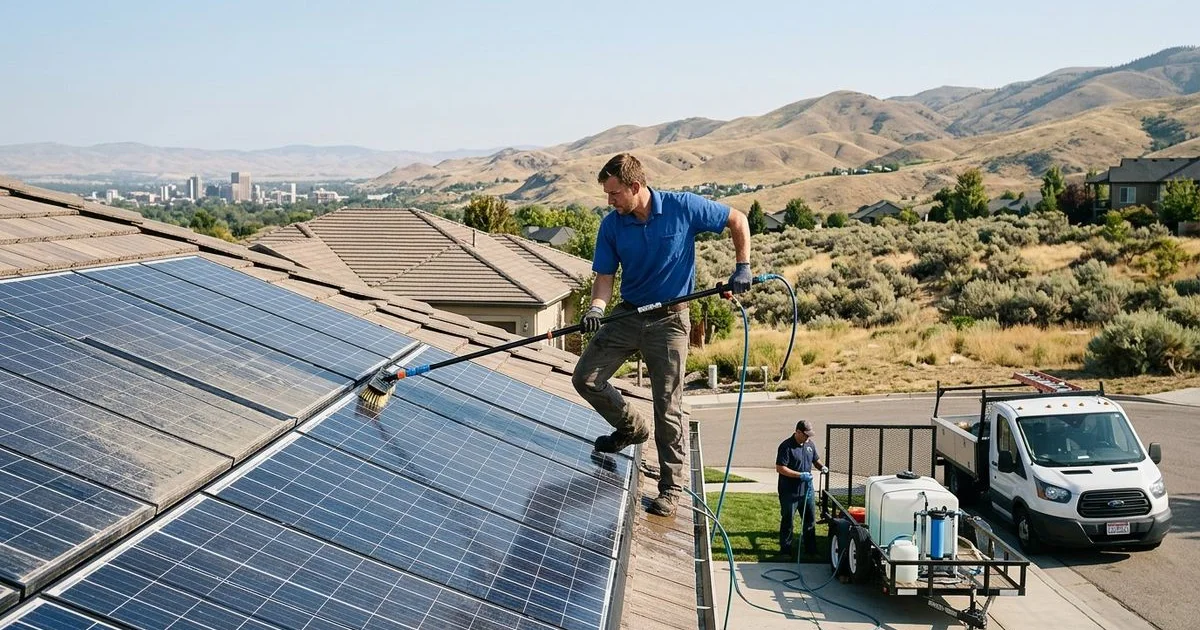
Roof work requires specialized safety gear and specific technical training. Climbing a two-story home with a hose and a squeegee is a recipe for a catastrophic accident.
Our crews strictly follow OSHA fall protection guidelines, utilizing safety harnesses and secure tie-offs for every high-elevation job.
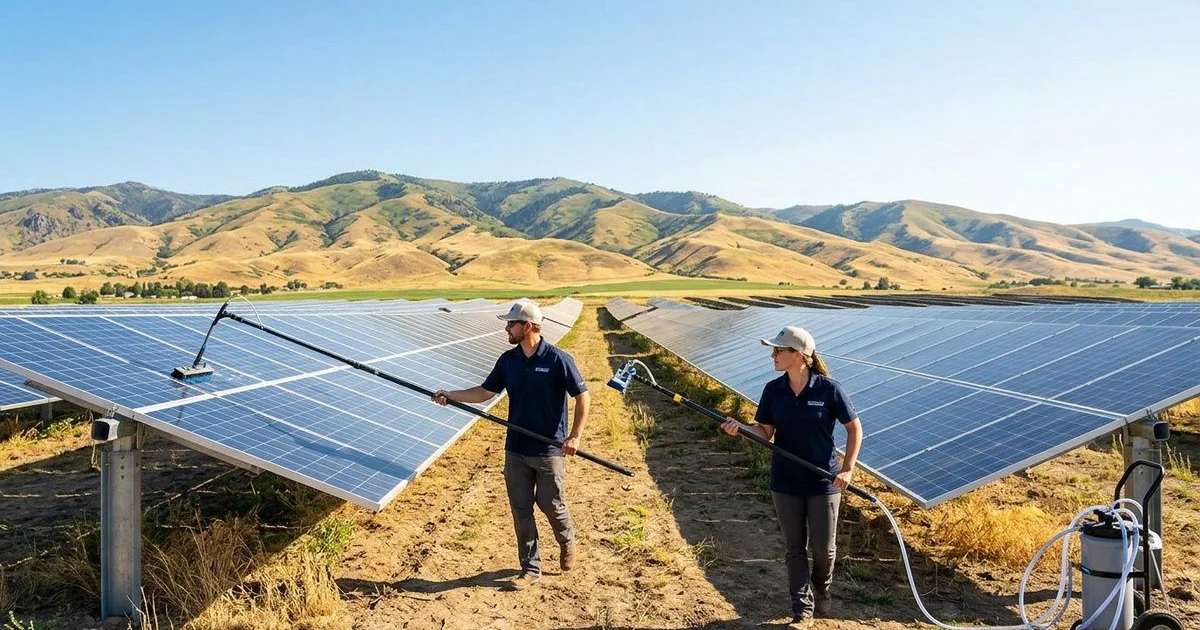
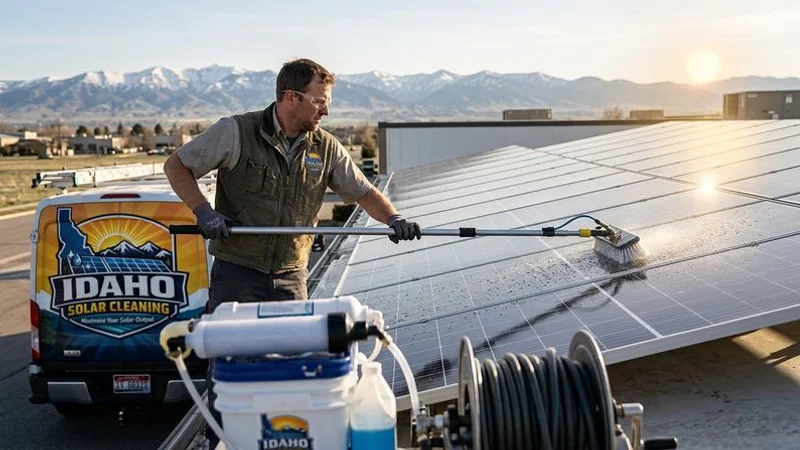
- Roof-level washing: Technicians use specialized water-fed poles to clean the glass without putting destructive weight on the frames.
- Electrical diagnostics: Licensed electricians must handle any voltage testing or inverter internal troubleshooting.
- Thermal imaging: Professionals use FLIR infrared cameras to pinpoint invisible micro-cracks and failing internal diodes.
- Mesh guard installation: Securing heavy-duty galvanized steel critter guards requires specialized clips that will not void your equipment warranty.
Common Maintenance Mistakes Idaho Homeowners Make
Using the Wrong Cleaning Products
Applying standard household window cleaner is one of the most frequent errors corrected in the field. These commercial soaps leave a sticky chemical residue that actively attracts dust right back onto the glass. Some harsh chemicals even dissolve the microscopic anti-reflective coating applied at the factory.
Our professional cleaning rigs utilize reverse osmosis filters to create deionized water. This ultra-pure water has a Total Dissolved Solids reading of less than 10 parts per million, ensuring it dries completely spot-free without any chemical additives.
Pressure Washing Panels
Consumer pressure washers operate at far too high a velocity for fragile solar equipment. A standard driveway washer outputs over 1,500 pounds per square inch of force.
We have seen that kind of extreme pressure shatter tempered glass, rip apart the weatherproof silicone seals, and force water directly into the junction boxes. Soft washing with a specialized brush at normal garden hose pressure, which is under 40 PSI, remains the only approved method to protect your warranty.
Ignoring Small Issues
Ignoring a tiny hairline crack often leads to a complete module failure during the next hard freeze. Moisture creeps into that tiny fissure during a rainy fall afternoon.
Our harsh winter nights then cause that trapped water to freeze and expand, blowing out the entire solar cell. Similarly, a small pile of twigs from a pigeon nest quickly transforms into a major fire hazard once the dry summer heat arrives. Address small anomalies immediately to avoid total system replacements.
Cleaning at the Wrong Time
Washing your array at noon in the middle of August is incredibly risky. The dark glass on a solar panel easily reaches internal temperatures exceeding 150 degrees Fahrenheit during peak summer sunlight.
Hitting that scorching glass with 60-degree tap water causes rapid thermal contraction, which shatters the module instantly. The safest cleaning windows are always early morning or late evening when the ambient temperature matches the equipment. Hiring a dedicated service provider takes the scheduling guesswork entirely out of your hands.
How Often Should You Schedule Professional Maintenance?
Determining your ideal service schedule depends heavily on your immediate surrounding environment. Homes located near busy agricultural fields or heavy construction zones require much more frequent attention than houses in quiet, paved neighborhoods.
We suggest a strategic, proactive calendar to maximize your power generation year after year.
- Routine Cleaning: Two times per year, ideally right before the spring peak in April and again in early October.
- Comprehensive Inspection: Once per year, combining a thorough visual and electrical hardware check with your spring wash.
- Diagnostic Imaging: Every two to three years, or immediately following any unexplained drop in your daily kilowatt-hour production.
- Post-Wildfire Emergency Wash: Schedule an immediate cleaning after heavy smoke clears to remove the highly acidic ash layer.
Protect Your Solar Investment With a Maintenance Program
Consistent professional care is the smartest strategy to maximize your energy savings over the next three decades. A properly maintained photovoltaic system in the United States generates reliable, clean power for 25 to 30 years.
Our team understands that managing these technical seasonal checklists takes up valuable weekend time. If applying these Solar Panel Maintenance Tips for Idaho Homeowners feels overwhelming, the solar panel maintenance program handles the entire process for you. We take complete ownership of the scheduling, the safety protocols, the specialized cleanings, and the performance documentation.
Contact us today to review your current setup and find out exactly how much power a professional cleaning can restore to your home.