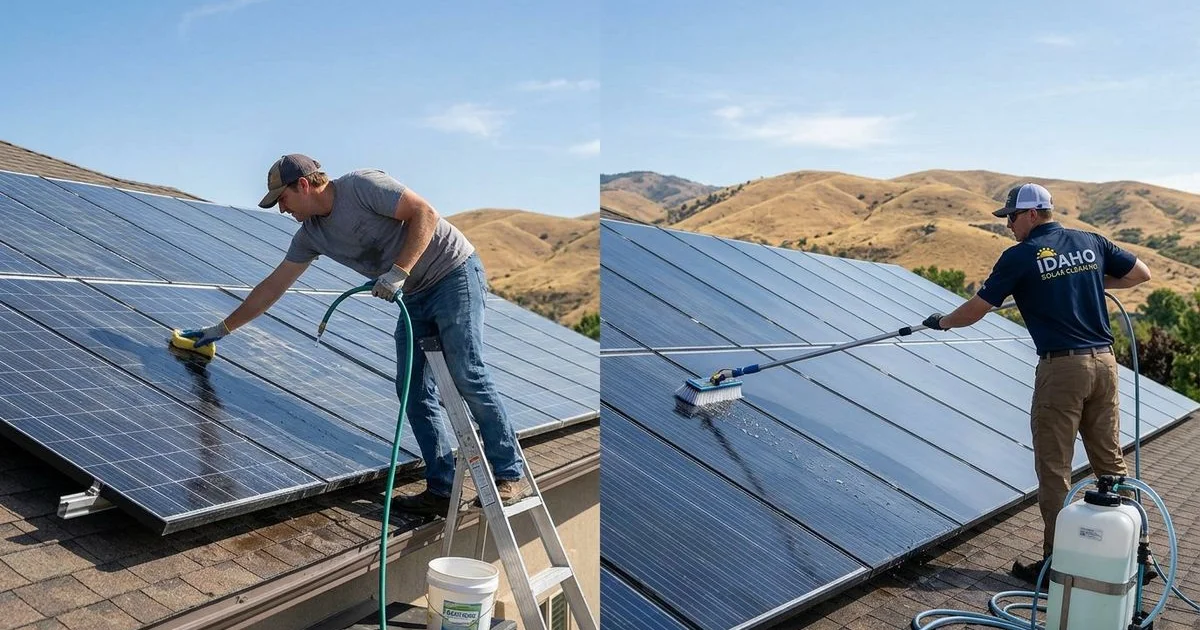
We hear the same question from US property owners every single week regarding DIY solar panel cleaning vs. professional service. A garden hose is already in the yard, so spraying down dirty solar panels seems like an easy way to save cash. This completely understandable desire to cut costs often leads to expensive mistakes.
The reality is that tap water carries hidden risks for solar equipment.
We have seen well-meaning homeowners accidentally ruin their energy production by using the wrong cleaning methods. Trusting a professional solar panel cleaning provider is the safest path forward. Hard water deposits create a permanent haze that blocks sunlight and drives up utility bills. Let us look at the actual data behind efficiency losses, explain the safety risks, and explore a few practical ways to maintain your investment.
The Hard Water Problem Across the US
We know that hard water is a massive issue for solar arrays across the United States. Regions spanning from the Treasure Valley in Idaho to the deserts of the Southwest have high concentrations of calcium, magnesium, and silica in their municipal water supplies. Spraying this tap water onto hot glass causes the moisture to evaporate instantly in the sun.
Those leftover white mineral spots act like tiny opaque lenses that scatter incoming light away from the solar cells.
“The National Renewable Energy Laboratory (NREL) reports that dirty solar panels can lose up to 25 percent of their efficiency, making proper cleaning methods critical for your return on investment.”
We consistently measure severe performance drops when panels are repeatedly washed with untreated tap water. In highly polluted or agricultural areas, that efficiency loss can plummet to 50 percent if improper cleaning creates a sticky mineral base for dust to cling to.
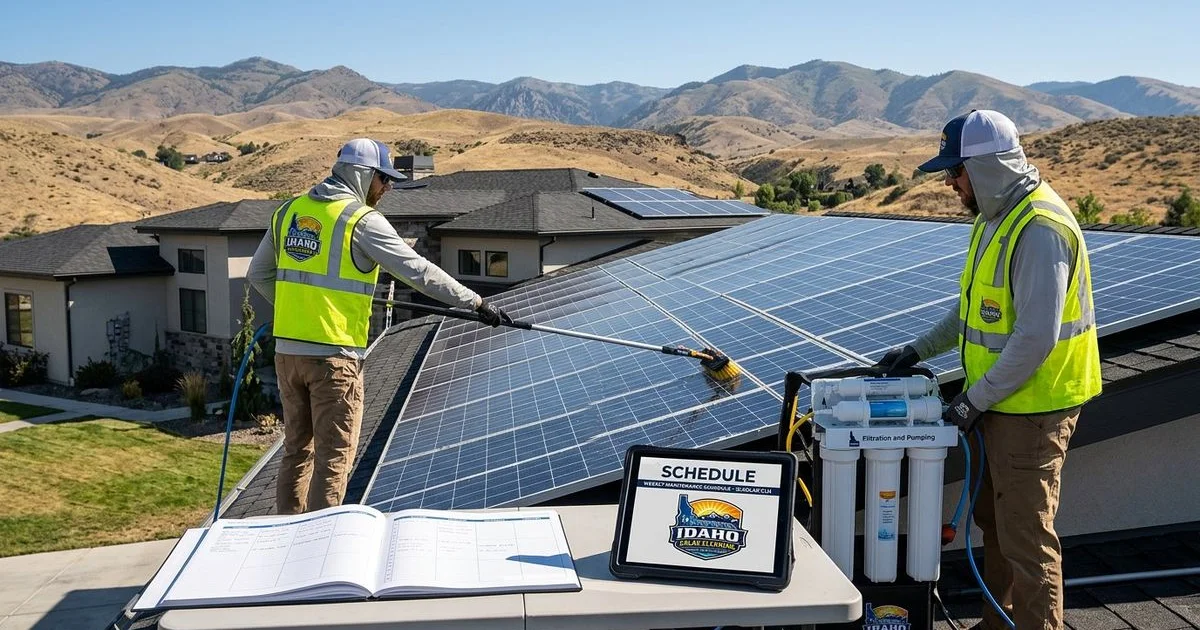
Professional cleaners rely on purified, deionized water that contains zero dissolved minerals. You will immediately see the difference in clarity between a panel washed with tap water and one treated with a specialized deionized system.
Safety Risks You Should Not Ignore
We cannot overstate the extreme physical dangers of working on a sloped roof. Water turns both the roof shingles and the smooth glass panels into incredibly slippery surfaces.
Every year, thousands of people end up in the emergency room due to residential falls.
Our team closely follows industry safety data to ensure proper protocols. According to the preliminary data from the 2025 NSC Safety Congress and Expo, fall protection remained the most frequently cited Occupational Safety and Health Administration (OSHA) violation for the 15th straight year. Recent Bureau of Labor Statistics data also confirms that falls account for 82 percent of all fatal accidents in the roofing industry.
Professional technicians mitigate these severe risks through strict safety measures:
- OSHA-compliant safety harnesses and roof anchors
- Slip-resistant footwear designed for pitched surfaces
- Extension poles that keep workers safely grounded or positioned
- Electrical hazard training to safely navigate live solar components
Damage to Panels and Voided Warranties
We frequently encounter solar arrays that have been permanently damaged by DIY cleaning attempts. Manufacturers outline strictly approved maintenance methods in their documentation. Violating these guidelines instantly voids your warranty coverage.
Here are the most common DIY mistakes that destroy solar equipment:
- Using abrasive materials: Scrub brushes or rough sponges easily scratch the specialized anti-reflective coating on the glass.
- Applying household chemicals: Dish soap and window cleaners leave a film and degrade the weatherproof silicone seals around the frame.
- Using a pressure washer: Water blasted at over 1,500 PSI easily penetrates panel seams and floods the electrical junction boxes.
- Cleaning during peak heat: Cold tap water hitting hot glass causes thermal shock, which creates microscopic fractures in the solar cells.
- Walking on the array: Putting body weight on the panels creates invisible microcracks that permanently reduce energy output.
We always advise property owners to read their specific warranty terms before attempting any maintenance. Specialized crews strictly use manufacturer-approved soft-bristle brushes and low-pressure delivery systems to clean the glass safely.
What Professional Cleaning Actually Includes
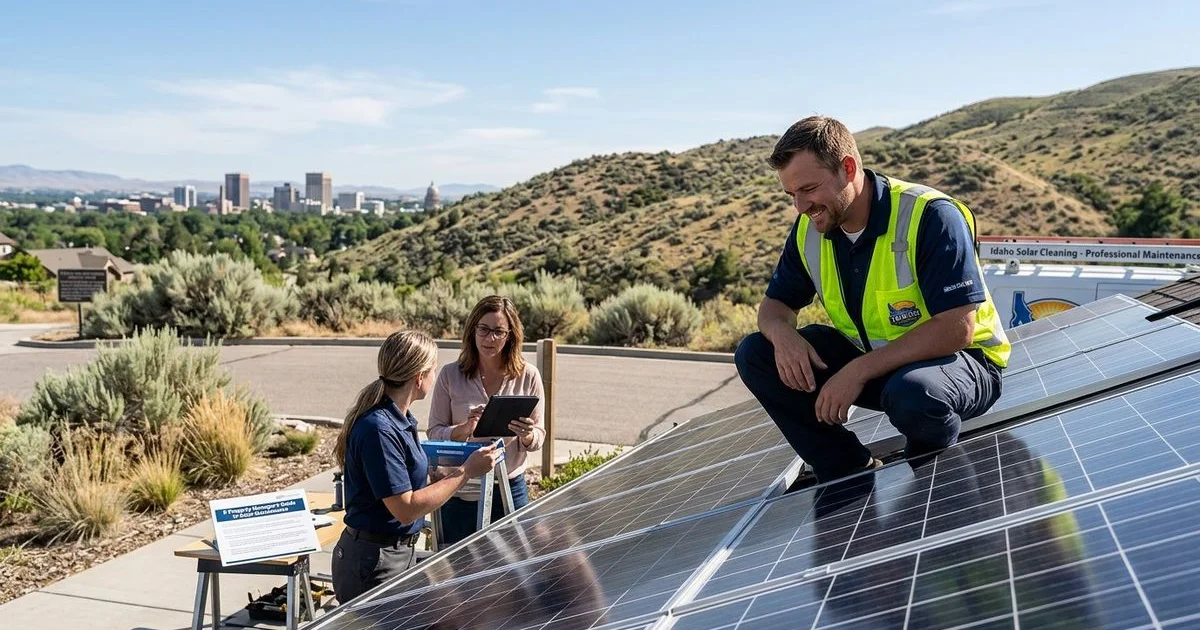
We want to clear up the misconception that professional service is just a person with a hose. A true professional cleaning visit involves specialized equipment and a comprehensive health check of your entire solar system.
The standard service process includes several critical steps:
- Pre-cleaning inspection: Checking for microcracks, loose wiring, and debris under the mounting hardware.
- Water purification: Using a multi-stage filtration system and a Total Dissolved Solids (TDS) meter to guarantee 0 PPM (parts per million) water.
- Soft-brush agitation: Utilizing specialized boar-hair or soft-nylon brushes to safely lift bird droppings and baked-on tree sap.
- Post-cleaning verification: Confirming the panels are spotless and recording performance notes for your maintenance history.
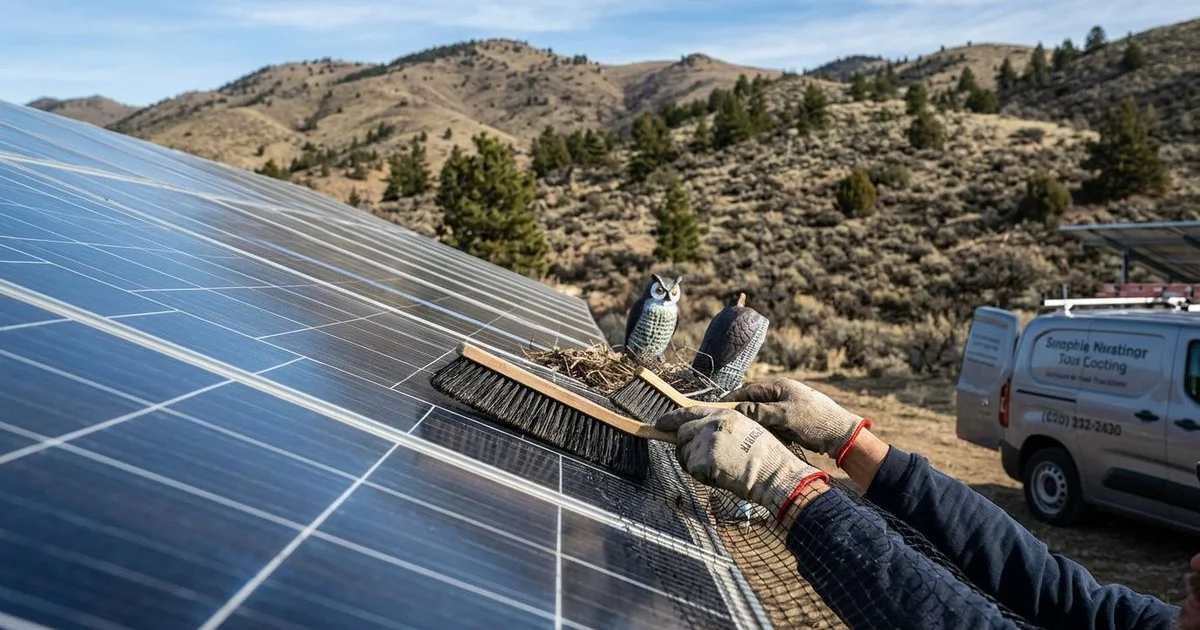
We often spot early warning signs of hardware failure during these routine visits. Catching a chewed wire or a failing inverter early saves property owners thousands of dollars in lost energy production.
DIY Solar Panel Cleaning vs. Professional Service: The Real Cost Comparison
We encourage clients to look at the actual math before purchasing DIY cleaning supplies. Professional service is significantly more cost-effective when you calculate the hidden expenses of doing it yourself.
Let us compare the average costs based on recent 2025 and 2026 market data:
| Expense Category | DIY Approach | Professional Service |
|---|---|---|
| Upfront Equipment | $300 to $500 (Deionized tank, carbon fiber pole) | $0 (Included in service) |
| Safety Gear | $150 to $200 (Harness, roof anchors) | $0 (Included in service) |
| Average Per-Visit Cost | $0 (Just your labor) | $172 to $385 (National average) |
| Risk of Damage | High (Voided warranties, microcracks) | Zero (Fully insured) |
We see the return on investment almost immediately after a professional wash. According to recent Thumbtack pricing data, the national average for a professional visit is roughly $258. The energy production gains from removing heavy dust and grime usually offset this modest fee within a few short billing cycles.
When DIY Might Be Acceptable
We always try to be completely transparent about when you actually need professional help. Certain low-risk situations allow for basic DIY maintenance without endangering your safety or your warranty.
You might handle the cleaning yourself under these specific conditions:
- Ground-mounted systems: You can safely reach these panels without a ladder using an inline RV water filter and a soft brush.
- Light morning dust: A gentle rinse from a filtered water source before the sun heats up the glass is usually safe.
- Edge debris removal: Sweeping dry leaves away from the bottom edges prevents water damming without requiring glass contact.
We still recommend booking at least one professional visit annually even if you do light maintenance yourself. A trained technician will safely remove the stubborn, baked-on contaminants that a simple rinse leaves behind.
The Bottom Line for US Homeowners
We know that environmental factors like agricultural dust, wildfire smoke, and seasonal pollen severely impact your solar investment. Washing your array with hard tap water actively makes the problem worse by layering permanent mineral deposits onto the glass.
When weighing DIY solar panel cleaning vs. professional service, proper maintenance requires the right tools, purified water, and strict safety training.
We are ready to help you maximize your energy production and protect your warranty. Professional residential solar panel cleaning delivers measurably better results, keeps you safe, and pays for itself through lower utility bills. Reach out to a qualified team today to schedule your first appointment and experience the difference a truly clean solar array makes.